
Discounted Payback Period: Definition, Formula & Examples


Calculating period cost ratios, such as period cost as a percentage of sales or total expenses, to provide insights into how these indirect costs impact your organization’s performance. Interest payments on debt are considered a non-operating period cost because they relate to the financing structure of the business rather than its core operations. This expense reflects the cost of borrowing capital, which is separate from the company’s manufacturing or selling activities. Weighted-average costing mixes current period expenses with the costs from prior periods in the beginning inventory. This mixing makes it impossible for managers to know the current period expense of manufacturing the product.
Grow Your Business With TranZact.
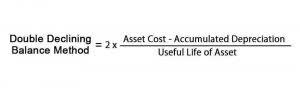
- The choice of depreciation method depends on factors such as asset usage patterns, expected future cash flows, and accounting policies.
- Similarly, enter “-20” if you are withdrawing money from an investment or deposit and enter “20” if you are depositing $20 to cover the interest or the principal of a loan/credit.
- This also streamlines your Inventory, Purchase, Sales & Quotation management processes in a hassle-free user-friendly manner.
- These costs are not allocated to inventory and are charged as expenses in the accounting period they were incurred.
- While certain advertising expenses, such as retainer fees for marketing agencies, may be fixed, additional advertising spending may vary based on promotional campaigns and initiatives.
This also streamlines your Inventory, Purchase, Sales & Quotation management processes in a hassle-free user-friendly manner. The infographic below shows how discounted cash flows accumulate over time and where the DPP occurs. Suppose a company invests $5,000 in a project and expects annual inflows of $2,000, $4,500, $4,500, $3,000 and $3,000 over the next five years. If we ignore discounting, the cumulative nominal cash flow turns positive between years 2 and 3, giving a simple payback period of a little more than two years. Period costs can be broadly categorized into selling expenses and general & administrative (G&A) expenses. Resources consumed to period costs formula provide or maintain the organization’s capacity to produce or sell are capacity costs or supportive overheads.
- The period cost is important and a necessary thing to keep track of because it allows you to know your company’s net income for each accounting period.
- In addition, a period cost is more likely to be a fixed cost, while a product cost is likely to be a variable cost.
- Yes, period costs can be capitalized in limited circumstances when specific accounting standards require or permit capitalization.
- Classifying costs as product vs period costs, fixed vs variable costs, and direct vs indirect costs is crucial for financial analysis and decision-making.
- Whether you’re a business owner, manager, or investor, grasping the concept of Period Costs is essential for making informed decisions, optimizing resources, and ultimately achieving financial success.
- Product costs help you fine-tune the price of each item you sell, ensuring profitability.
What are Milestones in Project Management?
- Period costs are generally separated into functional categories that reflect the non-manufacturing aspects of the business.
- If liability is short-term and due within one accounting period and is not directly tied to the production of a product or inventory costs, then it could be considered a period cost.
- This insight can lead to more efficient cost management and allocation strategies, ultimately impacting the company’s profitability.
- These costs are typically presented on the Income Statement below the Gross Profit line.
- Period costs are only reported on the income statement for the period in which they are used up or incurred.
- When a company spends money on an advertising campaign, it debits advertising expense and credits cash.
Examples of period costs include salaries, rent, utilities, and advertising expenses. In addition to categorizing costs as manufacturing and nonmanufacturing, they can also be categorized as either product costs or period costs. This classification relates to the matching principle of financial accounting. Therefore, before talking about how a product cost differs from a period cost, we need to look at what the matching principle says about the recognition of costs. Now let’s look at a hypothetical example of costs incurred by a company and see if such costs are period costs or product costs. In other words, period costs are expenses that are not linked to the production process of a company but rather are expenses incurred over time.
What are the 4 Types of Databases? – Operational, Distributed, External and Hypermedia Database Management System
Variable costs are the expenses that change with the level of production or sales. Careful monitoring of marketing expenses is key to controlling operating budgets and increasing profitability. For example, reducing digital marketing expenses by $1,000 would increase net income by $12,000 per year. The core difference between period and product costs lies in their treatment within the accounting system. The main characteristic of these costs is that they are incurred over a period of time (during the accounting period).

#2 – Usage of Period Expense in Inventory Valuation

Operating Income represents Foreign Currency Translation the profitability of the company’s core business activities before considering financing costs or income taxes. In contrast, product costs are expenditures directly related to bringing goods to a saleable condition. These costs include direct materials, direct labor, and manufacturing overhead within a production facility.
Gathering information on all period https://reginagoundar.com/2024/05/15/how-to-calculate-retained-earnings-formula-9/ costs from your company’s general ledger. Understanding the nature of a cost is therefore essential for accurate financial reporting and managerial decision-making. This recognition timing determines whether an expenditure is immediately expensed or first capitalized as an asset.

They continue to grow, forcing the business to bear them regardless of profit or loss. In this article, we will explore the steps involved in calculating period cost for any given accounting period. The preceding list of period costs should make it clear that most of the administrative costs of a business can be considered period costs. There is no fixed approach to identifying the period expense in all the particulars.
Period costs refer to all business expenses that are not directly tied to the production of goods or inventory. These costs are not included in the cost of goods sold (COGS) and cannot be capitalized on the balance sheet. Instead, they are recorded as expenses on the income statement in the accounting period in which they are incurred. Once you have calculated the total period cost, it is essential to analyze these results and report them in your financial statements under the income statement. This analysis will help determine the efficiency of your organization’s operations, make informed decisions on expense reduction, and monitor resource allocation. Subtracting the total period costs from the Gross Profit yields the financial metric known as Operating Income.
FIFO costing does not mix costs from prior tenure (in beginning inventory) with a current period expense. To quickly identify if a cost is a period cost or product cost, ask the question, “Is the cost directly or indirectly related to the production of products? Properly classifying costs is key for accurate financial statements, and understanding the different roles of Period and Product Costs is crucial for financial reporting.